

|
Welcome to Fibreglass-Resin-Sales |
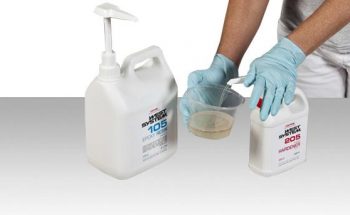
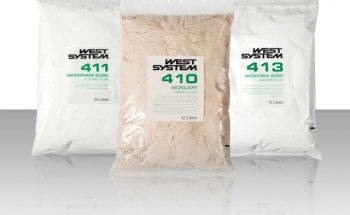
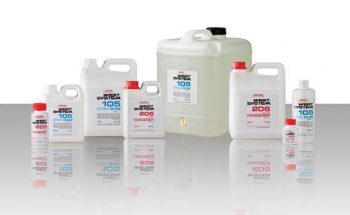
| What are composites? Well they used to be called 'fibreglass' which in itself was not correct. Fibreglass Reinforced Plastic was the correct term with the actual fibreglass being the reinforcement. These days fibre reinforced plastic (FRP) is the more correct terminology as we use Carbon, Aramid and Fibreglass fibre to reinforce plastic. Around the world the word composites are used to also describe fibre-reinforced plastic, in the USA this is pronounced 'Com-possit'. The plastic also takes many forms but composites usually use a resin system, which comes as a liquid. This liquid with the addition of a catalyst or a hardener (they are different) will react to form a solid. This is the plastic part of reinforced plastics. In some cases projects can be undertaken using just the "plastic" or resin. For instance you may use a FRP laminating resin and modify it for coating or casting. Many thousands of different projects can be undertaken by choosing the right reinforcement and coupling it with the right resin (plastic) and in some cases adding various fillers and pigments. Most of these projects can be undertaken with very little special equipment and a little base knowledge - and that's where we can help!! Fibreglass & Resin Sales has specialised in the aviation and race car scene for many years. We actually use the products we sell! This gives us the insight into what works and what doesn't so we can aim you down the correct path. It would be fanciful to say you won't have some problems but we are always there to walk you through your project to make sure it all works for you. (There is no black magic required.) Because every project is different there are many and varied ways to approach the associated problems, feel free to talk to us before you get started. Contact us by phone - fax or email. | The plastic part of reinforced plastics. There are many forms and types of resin and for most uses these fall into 4 types. 1. Polyester Resins - The most common cheapest and easiest to use - uses MEKP catalyst. 2. Vinylester Resins - Renowned for their chemical resistance and used wherever there is chemical attack - uses MEKP catalyst. 3. Epoxy Resins - The rolls royce of resin used where high strength and dimensional stability is required. 4. Phenolic Resins Almost Fireproof - uses acid catalyst - has a short shelf life needs to be stored in the fridge (not stocked, available on request). High Grade General Purpose (Ortho) Laminating Resin. Hetron 197 Fire retardant resin. Water Clear Casting Resin (for embedding all sorts of things). Natural Brushing Gelcoat (also spraying grade available). White Brushing Gelcoat (also spraying grade available). Red Tooling Gelcoat (used for high use moulds). Flowcoat White and Natural (Brushing or Spraying) Vinylester Resin (For chemical resistance) TL Epoxy Systems Rapid Cure Epoxy Adhesive - 5 to 7 min cure Available - 250ml, 500ml, 2ltr and 8ltr kit. Pumps also available for 2ltr and 8ltr packs. Techniglue - 12-hour cure gel adhesive for marine, furniture, hobbies, woodturning and a million other uses. Available with a fast or slow hardener. 750ml, 1.5ltr, 6ltr and 30ltr packs, "This is the Greatest!" Techniglue R5 High Performance - Liquid Adhesive Technifil - Lightweight-fairing compound - Available Kit sizes - 2Lt - 8Lt R246 - High Performance Laminating system with fast, medium and slow hardeners R119 - High Strength Laminating system R2514 - Multipurpose Tooling system R2515 - High Temp Laminating system R2501 - Aluminium Filled Casting system (Machineable) R1025 - Electrical Potting system (Varied properties depending on hardener used) reinforcements Basically there are three forms of reinforcement. 1. Chopped Strand Mat (CSM), matting or even called random strand mat. These are usually short fibres (40 to 70mm) held together with a binder to hold them into a mat form. After the mat is saturated with resin the binder dissolves allowing the strands to be coaxed into the correct shape. 2. Chopped Glass Fibres Usually 5-8mm in length (listed as a filler) 3. Woven Fabrics - these are actually woven on basically the same machines that manufacture the clothes we wear. Because these fabrics are woven with strands going in two directions at 90 degrees to each other, they are called Bi Directional Fabrics. Plain Weave - Basic weave pattern. The fabric is easy to handle due to good dimensional stability and minimal fraying when cut. Lends itself to large flat surfaces. Twill Weave - Greater mechanical strength and stiffness of laminate due to limited thread deflection (crimp). The fabrics are more drapable and therefore better suited to shaped components than plain weave fabrics. Satin Weave - Even less thread deflection than with twill fabrics. Very good drapability makes it suitable for small radius shapes. Unidirectional Can be supplied in various forms, from single rovings of different sizes to Fabric forms. The uni fibre is held by various methods Such as a Cobweb glue sprayed on or a thin paper strip glued across the width or a random polyester thread across the width. ACCESSORIES MEKP - (Methyl Ethyl Ketone Peroxide) Catalyst - Nasty stuff. Keep out of reach of children and wear eye protection when dispensing. Most polyester resin systems use between 1% and 2% to initiate a cure or 10 to 20mls per 1kg of resin. Available in 60ml, 125ml, 250ml, 500ml, 1ltr and 4ltrs. Ask for a Data sheet. PVA (Poly Vinyl Alcohol) Release Agent. Available - 125ml, 250ml, 500ml, 1ltr, 4ltrs and 20ltr. Acetone (used for clean up but very flammable. Be careful) Available - 250ml, 500ml, 1ltr, 4ltrs and 20ltrs Styrene Wax Added to polyester resins stops stickiness on the final coat Styrene Monomer used to thin polyester (most systems do not require thinning, Beware addition of styrene monomer increases shrinkage.) Pigments to develop opaque colours Dyes - to develop transparent colours (great for pseudo stained glass) New to the pigment rang are our PEARLEX pigment powders. Often used when making your own pen blanks. ILLERS Fillers used with various resins give varying characteristics such as minimising shrinkage, reducing weight for a given volume, reducing cost and changing resin consistency. None of these fillers have a particular ratio, you add to 'taste' or add what you require to get the job done. Cocktails are very much the Order of the Day. For instance, you may start with an epoxy resin/hardener base, add some Q Cells Micro to bulk out the mixture, some Mill Fibre to enhance strength and Cabosill to stop the mixture 'drooping' - "A Filler Cocktail". TALC - The oldest filler in common use - it is easy to use, very cheap as well as being very good in compression, but also very heavy. Q CELLS - One of the original micro spheres, bubbles or balloons. It has reasonable compression strength and is generally used to get bulk without adding too much weight. It also sands easily. PHENOLIC MICRO BALLOONS - Generally more flexible filler. As its name implies the bubble is made from phenolic. It is particularly favoured by European manufacturers. Is more difficult to mix into the resin, as well as being expensive. MILL FIBRE - A fine glass fibre powder. As with all glass fibre, it adds great strength both tensile and compressive. Used in a small percentage. It can promote adhesion to foam cores. COTTON FIBRE - Sometimes called flox or cotton flox or cotton linters. As with the glass, cotton powder adds tensile and compressive strength. It Shellac Flakes dissolved in methylated spirits used for sealing and coating quick and easy. Block Plasticine used for small moulds sealing or damming a mould and a dozen other things - .5kg and 4kg blocks Release Wax Ceara K&H T1 (check with the girls on these as they all suit various applications) Sheet Wax used to set cavity thickness where inner and outer moulds are being constructed .5 to 6mm thick. Aluminium Foil Tape can be applied over wood, cardboard and most things, and then moulded off. Plastic Craft Moulds / Jewellery Moulds - rectangles squares knob moulds - ovals - domed circles - octagons - hearts - tear drops and more. Silicone Craft Moulds - Great for making resin decals for embellishing cards, boxes, photo frames etc Syringes 10 20 30 60ml plus Blunt needles good for injecting resins. Catalyst Dispensing Bottles 15ml 60ml Brushes 12mm to 100mm rollers all sizes scales drum taps mixing sticks gloves (latex, cotton and vinyl) disposable aprons and overalls air tools scissors plastics bottles and lids tin cans and more. Vacuum Bagging Gear Vacuum generators vacuum plumbing quick disconnect valves - vacuum gauges quick lock bags and seals dum dum tape perforated film breather fabric peel ply and bagging films. Pultruded Sections manufactured by the pultrusion process rods tubes angles channels etc. We only have limited stock talk to us about you. RESIN JEWELLERY & RESIN CRAFT There are many forms of Jewellery & Craft which can be made using resin, but what makes it more interesting is that everybody has a different view on what they want to achieve. We can offer silicone rubber moulds ready to go or we can show you how to make moulds using silicone, plus we have a variety of clear plastic moulds suitable for jewellery, draw knobs, paper weights and much more. Then there are coating systems that can be used on wood (as in clocks, trophies and table tops) or sculptures made from clay, plaster or foam. To add to this we have a great range of pigments (for opaque colours) Dyes to get the see through look, granite powders, metal flakes and the list goes on. To help achieve your desired results we have a variety of data sheets and books, all the equipment required and first hand knowledge to assist. |
© Fibreglass-Resin_Sales.com > all rights reserved